Roadway Funding
About the Fuel Tax
The RTC-5 fuel tax is a voter-approved gas tax of 58.16634 cents per gallon (as of July 1, 2026) on gasoline and diesel fuel sold in Washoe County. The rate is tied to a 10-year rolling average of the Producer Price Index, or PPI, which tracks the average change in nonresidential construction costs over time. That rolling average is deliberate: it smooths out short-term spikes and dips in construction costs, so funding for RTC road projects stays stable and predictable year to year.
Fuel tax funding makes it possible for RTC and its partner agencies (City of Reno, City of Sparks, Washoe County and NDOT) to move forward with the planning, design and construction of projects that benefit millions of Northern Nevada residents and visitors. These projects create jobs, put local businesses to work and improve the economy. Roads cost far less to maintain when they’re kept in good condition instead of requiring full reconstruction due to deterioration. The fuel tax helps extend the power of taxpayer dollars to keep our Washoe County roads maintained for safety and longevity.
Key Uses of Fuel Tax Funds
- Improve Roads: Maintain and reconstruct regional roads to reduce congestion and extend pavement life.
- Strengthen Safety: Well-maintained roads reduce hazards and improve outcomes for vehicles, pedestrians and multi-modal users.
- Strengthen the Local Economy: RTC roadway construction projects funded by fuel tax supported over 2,500 local jobs in 2024, providing nearly $172 million invested back into the area. From contractors and crews to suppliers, ranging from small local shops to established firms, once complete, those same roads help customers and deliveries reach local businesses safely and reliably, keeping our community moving.
Fuel Tax FAQ
In 2008, Washoe County voters chose to approve fuel tax indexing, and they did so twice, reflecting a clear, sustained mandate from the community for stable road funding. The region has since relied on that steady funding to plan and deliver regionally significant roadway improvements. The Nevada Legislature also endorsed indexing and enacted enabling legislation in 2009.
As our community grows, so does the need to maintain and improve our roadway system. RTC-5 allows the fuel tax to adjust with inflation, ensuring RTC’s purchasing power keeps pace with rising construction costs so planned transportation projects can move forward as promised.
Fuel taxes funded approximately $420 million in needed roadway improvements in the last five years. The fuel tax’s steady, predictable structure has also allowed RTC to responsibly finance future projects in advance of construction, so that quality design and implementation can be at the forefront of major projects.
RTC receives fuel tax revenue through RTC-5 and uses it to fund regionally significant roadway projects on behalf of Washoe County, and the Cities of Sparks and Reno. This also frees up each municipality’s own fuel tax revenue to maintain neighborhood streets, extending the benefit of the tax well beyond RTC’s own project list.
RTC-5 funded roadway improvements help ease traffic congestion and support cleaner air, allowing commuters and goods to move more efficiently. These projects have also created construction jobs in our community and will continue to do so.
No single government entity can unilaterally end the voter-approved fuel tax. Suspending or ending it would require action from multiple government entities and careful consideration of constitutional, statutory, contractual and other legal limitations already in place, including commitments tied to outstanding bonds. That process would also put ongoing and planned roadway improvements across Washoe County at risk, from routine pavement preservation to major regional projects already underway.
RTC is not aware of any plans to suspend or end the fuel tax.
RTC does receive federal funding for roadway projects and maintenance, but that funding alone is not enough to keep pace with the transportation demands of a growing community. The federal fuel tax has not increased since 1993, leaving states and regions more reliant on local funding to complete needed road projects.
Electric and Hybrids
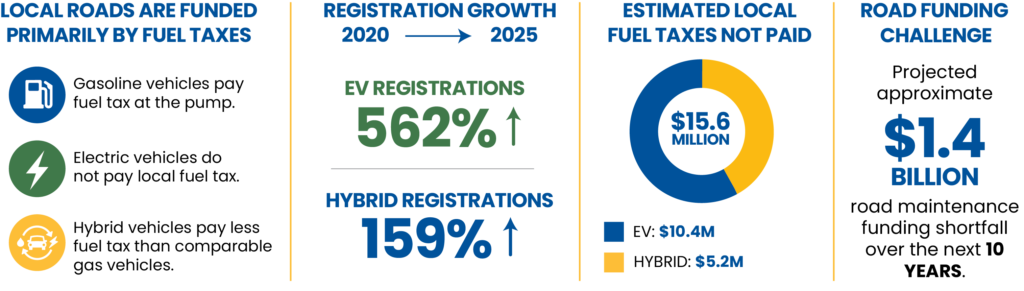
Increased vehicle fuel economy and electrification of vehicles isn’t captured as part of fuel tax indexing, which means the RTC is collecting less on average per vehicle every year, even with the annual adjustments.
On November 3, 2026, Washoe County voters will see a non-binding advisory question on their general election ballot. It asks whether voters support an annual road use fee on electric and hybrid passenger vehicles registered in Washoe County, adjusted annually for inflation, with proceeds dedicated to the Regional Transportation Commission (RTC) for road maintenance, congestion relief, air quality, and safety projects, subject to annual audits and public disclosure.
How the advisory question work?
This question is advisory only — it carries no legal force. Neither RTC nor the County can impose a fee based on the vote alone. The only path to an actual fee is action by the Nevada Legislature, which would need to authorize this type of fee in a future legislative session (the earliest opportunity is the 2027 session). If the Legislature does not act, no fee is created regardless of the vote outcome.

